


Yesterday, I had the fantastic opportunity to attend once again the Google Search Central Zurich event, which has been organized annually for the past few years and marks the last Google-organized search event of the year.
This year’s edition was a comprehensive, full-day event that brought together SEOs from across Europe (and, this time, from the US as well) to learn about the latest Google feature releases and updates, and to ask questions directly to the Google Search Relations team, along with the always fun opportunity to network and learn from a helpful and generous SEO community.
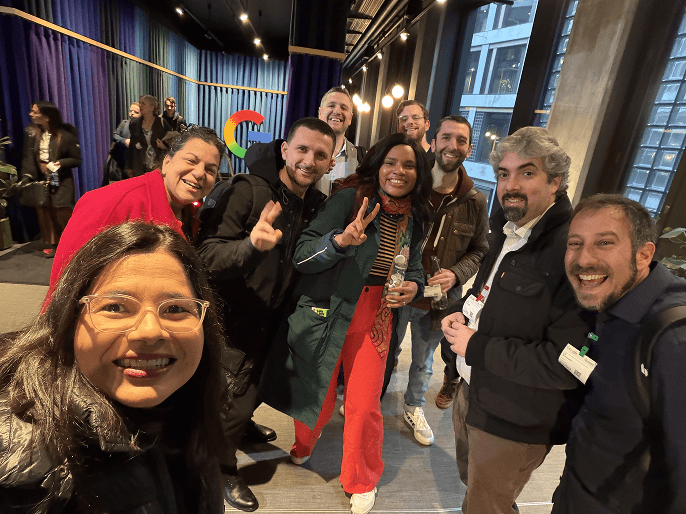
Below is a summary of three key topics discussed throughout the day, based on insights shared both in the Googlers’ presentations and during the Q&A hosted by John Mueller and Martin Splitt.
1. AI: They’re still measuring and experimenting with what they launch and there isn’t GEO without SEO
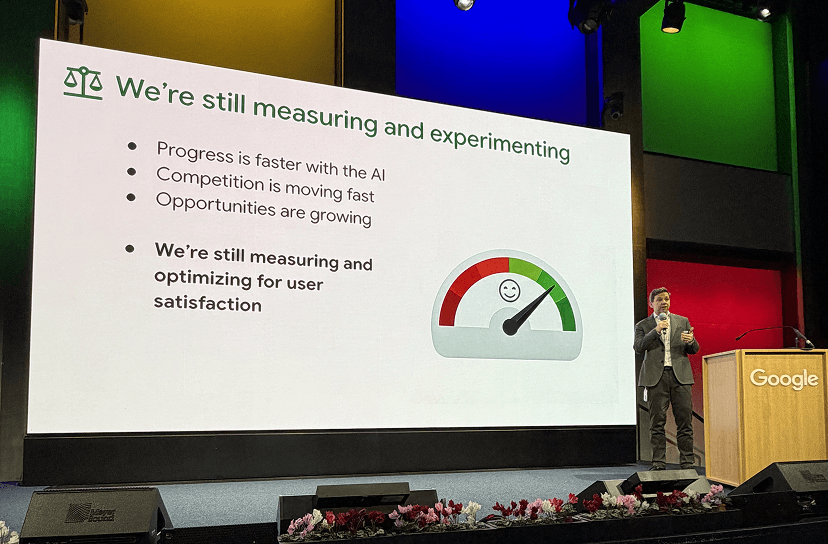
In general, Google shared how they decide what to launch by asking key questions: Is it good for users? What does good mean? How do you measure what’s good?.
The same principles apply to AI, where progress is happening faster, and competition is moving fast, and at the same time, they’re still measuring and optimizing for user satisfaction.
They clarified that with AI Overviews you’re still optimizing for their core ranking system, and that’s why what we can do is to focus on what users need; which is what their system does.
15% of all searches are new every day and this will grow with AI search
Google mentioned how because of AI search behavior, the number of new “different” searches will increase, and as a consequence, it will be a challenge to establish patterns to identify where and what to focus on, and not only in text but also with images and videos.
No GEO without SEO
During the Q&A Google also clarified that they don’t think is true that GEO (or whatever we want to call AI Search Platforms optimization) can be done without SEO: There’s no GEO without implementing SEO fundamentals.
LLM.txt don’t matter
When asked about LLMs.txt Google said again that they don’t think they matter as much. It’s just a text file for them.
How critical is structured data for Gemini?
It continues to be important. In particular, for data with authoritative meaning and regulatory information, like prices in shopping, it’s very important.
When is Google going to show AI Overviews and AI Mode in Search Console?
Google was asked and clarified that they didn’t have any announcement related to AI Overviews or AI Mode tracking – which is something the SEO community expects – mentioning that they don’t have anything to announce and that this data is already included in what’s already shown in the Google Search Console. Also, what they could say is that with AI, people tend to search more and get insights from other types of platforms, like social ones.
What about GEO metrics?
When asked about the metrics that we should look at for GEO, Google shared that not only for GEO but in general, we should look for the behavior and patterns in CTR and impressions; ideally exporting Search Console data via Big Query to avoid filtering, to establish patterns without limitations and using this data with Google Analytics data to better establish what’s having a real impact.
2. Google Discover: The core mission remains to stay on top of users interests by following trust and safety criteria
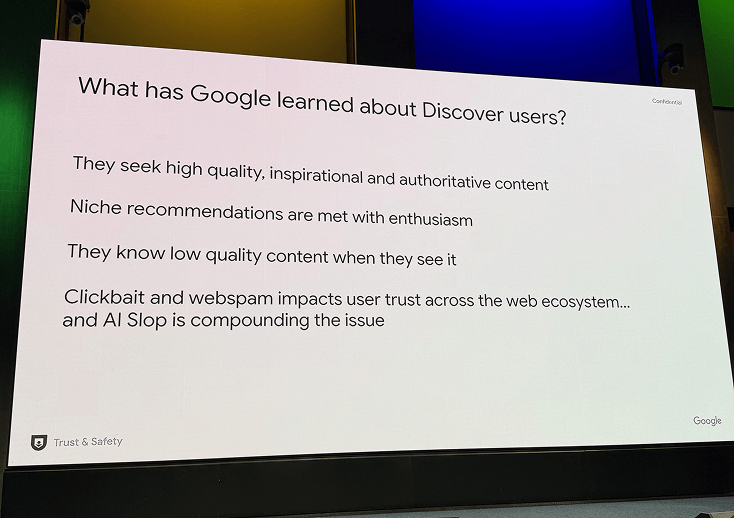
Google has learned that Discover users:
- Seek high quality, inspirational and authoritative content
- Are enthusiasts of niche recommendations
- They recognize low quality content when they see it
- Clickbait and webspam impact user trust across the web ecosystem and AI slop compounds the issue
They also clarified that quality synthetic content experiences are few and far between, going from:
- Risky content
- To low-value, but benign
- To lowbrow UGC slop, with some entertainment value
- To controlled generative AI applications
And how their existing systems are helping them to solve these new problems:
- Google’s search quality team has been fighting webspam for +20 years
- Minimal alignment to search ranking gives them tools to combat emerging abuse
- Large scale and precise feed improvements, makes space for high quality recommendations
That’s why the key recommendation is to continue optimizing for high quality interactions on Search to appear on Discover and avoid traffic volatility since users are Google’s #1 asset and utility on search is a hugely reliable signal for interest and intent:
- Publish high quality, authoritative, niche, inspirational content to attract an audience on Discover.
- UGC and video can supplement your reach : They’re updating Discover to make it even easier to find, follow and engage with the content and creators users care about most.
- They will continue to put users first: Their policies are public and compliance is expected, so is recommended to maintain quality across all of the sites you own and operate.
- Generative AI is an exciting opportunity for the whole web, and they don’t want to overshadow its potential with spam.
- They are laser focused on promoting high quality content, whether or not it’s AI generated.
Last but not least, Google also remembered that it’s risky if 90% of your site traffic comes from Discover too.
3. Google Shopping: Schema.org is key, use the new Merchant API & beware of CSR JS for Shopping Related Schema

Schema.org is fundamental for Shopping
Schema.org is the glue to bind a variety of ontologies together and they’re planning to expand with other organization level data (like promotions, store lists), as well as adding many more product / offer level properties and increasing their offering in AI related fields.
At the end, all the information you provide lead to the “digital Rome”, from Merchant Center Next, Search Console and Webpage markup specifying organization level information like returns, shipping, loyalty, that end up applying across offers.
For shopping, there’s a need for speed and free shipping: Unexpected shipping information is reason #2 and #3 for cart abandonment; which is why they support a variety of shipping conditions via the shipping service Schema.org type.
Avoid CSR JavaScript for Shopping Related Schema.org
In search: Google is parsing it. However, it invites drift if you have any content gap and is reflected in the page. What’s shown via CSR JS should accurately reflect what’s shown in the page content.
However, in Shopping it’s different because they crawl a lot. If they have to crawl everything it will end up being detructive, so they don’t load the whole JS. In shopping they also can’t cache as in search, since they need the latest information. This is why CSR JS for shopping should be avoided.
The new merchant API replaces the Content API for Shopping with expanded, improved and more integrations and data
- Google Product Studio: Generate product title and image optimizations at scale
- Merchant API Insights: With product performance, pricing tools, popular products, competitive landscape insights
- A notifications API: REal time push notifications for critical product status changes
- YouTube Shopping API
- More!
The Content API remains available until August 2026, and you can find the instructions to migrate (ideally soon) here.
Wrapping Up: Whatever the search platform, remember that it’s about optimizing for the user, avoid hyper fixating on things.
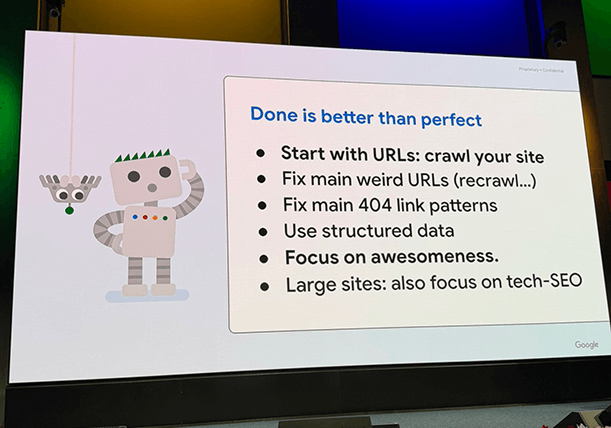
Beyond the specific (trendy) topics like AI, Discover or Shopping, Google reminded us:
- To avoid hyper fixating on things, and that done is better than perfect.
That we should focus on what matters more for the bigger picture, beyond those areas that are changing, and what actually drives impact for a great user experience. - That there are both page and site level signals that are important; although page level tend to be easier to fix and site signals take time to update.
- Building a brand is always good.
- Links or site moves don’t fix quality.
- Technical SEO doesn’t fix quality.
- Diverse traffic sources mean lower dependencies.
Last but certainly not least, I want to thank the Google Search Relations team -in particular, Martin Splitt, John Mueller, Daniel Weisberg and Lizzi Sassman, who were excellent hosts and engaged through the day with the SEO community who attended- always trying to help with useful answers, despite the understandable restrictions on what they can share, say and do to help us in many circumstances.

